
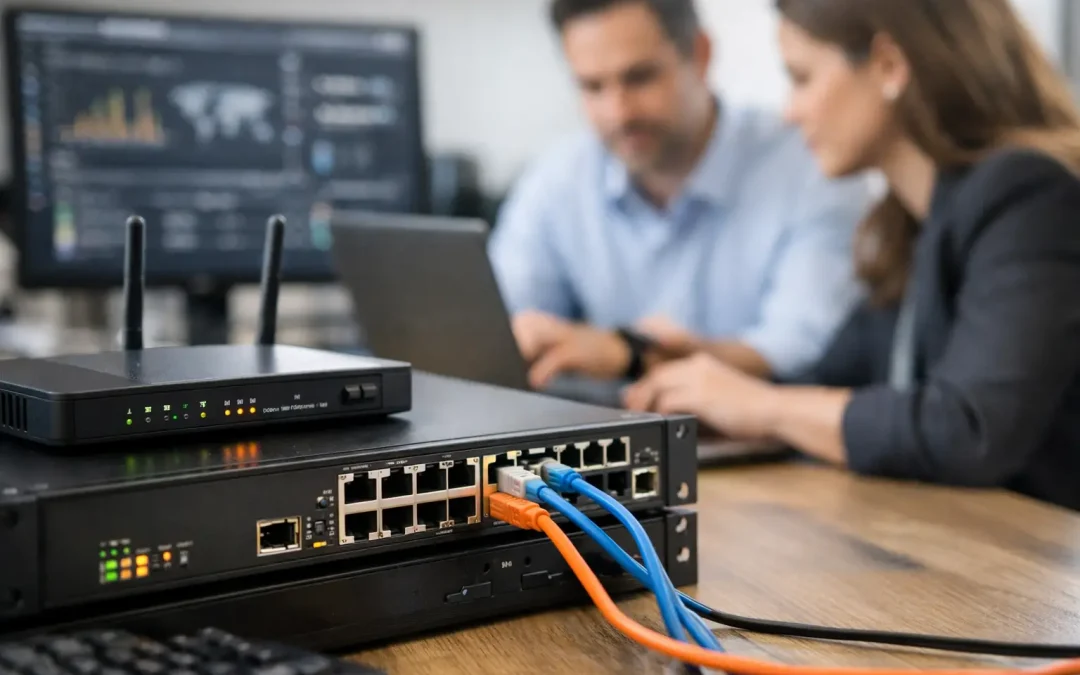
A firewall usually gets attention only after something goes wrong – remote users cannot connect, internet traffic slows to a crawl, a security alert starts piling up, or an audit reveals missing documentation. That is exactly why sonicwall firewall management services matter. For most small and midsize businesses, the firewall is not just another network device. It is the front line for internet security, VPN access, content filtering, application control, and basic business continuity.
If that device is misconfigured, outdated, or simply left alone too long, the risk builds quietly. Many companies buy a SonicWall because it is a strong platform, then assume the hard part is over. In reality, owning the firewall is only step one. Managing it well is where the protection actually happens.
What SonicWall firewall management services actually include
At a practical level, managed firewall service means someone is actively responsible for the health, security, and performance of your SonicWall environment. That typically starts with configuration review. Rules need to be logical, documented, and aligned with how your business works. VPN access needs to be secure without making remote work impossible. Firmware needs to be updated on a schedule that balances security risk with operational stability.
It also means ongoing monitoring. Firewalls generate a huge amount of noise, and most internal teams do not have time to sort normal traffic from a real concern. A managed service provider looks at logs, alerts, intrusion attempts, licensing status, hardware health, and changes that may introduce risk. If a site-to-site VPN drops, if a gateway antivirus service expires, or if an exposed service starts drawing suspicious traffic, someone should be aware before it turns into downtime.
There is also a documentation component that many businesses underestimate. A well-managed firewall should have a clear record of rules, VPNs, public IP usage, admin access, firmware version, subscriptions, and change history. That matters during audits, insurance reviews, employee turnover, and emergency troubleshooting.
Why businesses struggle to manage SonicWall in-house
SonicWall appliances are capable, but capability brings complexity. Over time, firewall rules tend to grow in a messy way. A temporary exception made during a software rollout becomes permanent. An old remote user account stays active after an employee leaves. A port forwarding rule remains open long after the original need disappears. Each individual item may seem small. Together, they create exposure.
This is especially common in offices where IT is handled by a generalist, an office manager, or an outsourced provider that only reacts when tickets come in. Firewalls do not stay secure on a break-fix model. They need regular attention.
The challenge is not just technical skill. It is time, process, and accountability. Someone needs to know what should be reviewed, when it should be reviewed, and how changes affect the rest of the environment. In healthcare, legal, finance, and other compliance-sensitive industries, that standard is even higher. You may need to support secure remote access, segmented networks, documented security controls, and evidence that systems are being maintained.
SonicWall firewall management services and business risk
A neglected firewall creates two kinds of problems. The first is obvious security risk. Outdated firmware, weak VPN settings, exposed services, and poorly controlled administrative access can all become entry points. Ransomware groups and automated scanners do not care whether your business has 15 employees or 500. If the opening is there, they will test it.
The second problem is operational risk. The firewall controls traffic flow for email, cloud applications, VoIP, remote offices, and remote workers. A bad change can interrupt daily operations fast. Even something simple like a content filtering policy or DPI-SSL setting can affect line-of-business software if it is rolled out without planning.
That is why good management is not just about making the firewall stricter. It is about making it accurate. Security controls should reflect what your business actually needs to do. Blocking too little is risky, but blocking too much creates support issues and workarounds that introduce different problems.
What a well-managed SonicWall environment looks like
A healthy SonicWall deployment is usually quiet, and that is a good thing. VPN users can connect reliably. Internet traffic performs as expected. Security subscriptions are current. Firmware is supported. Rules make sense and are reviewed periodically. Administrative access is limited and protected. Logs are available when something needs investigation.
There is also a plan behind the configuration. Guest wireless is separated from business systems. Servers and sensitive devices are not sitting flat on the same network as everything else. Remote access follows current security standards. Changes are documented rather than made ad hoc.
For businesses with multiple locations, a well-managed setup should also support consistency. Site-to-site VPNs should be stable. Policies should not vary wildly from office to office unless there is a clear reason. That makes troubleshooting easier and reduces the chance of hidden gaps between locations.
When to bring in SonicWall firewall management services
Some companies wait until they have an outage or a failed audit finding. It is better to act earlier. If you are not sure who has admin access to the firewall, if the last firmware update is unclear, or if no one can explain why certain rules exist, that is a sign the device needs review.
The same applies if remote work has expanded over the last few years. Many organizations added VPN access quickly and never revisited the setup. Others moved more services to Microsoft 365 or other cloud platforms but kept legacy firewall rules in place. Business networks change faster than most firewall configurations do.
It also makes sense to bring in a specialist when there is a merger, office move, internet carrier change, compliance requirement, or cybersecurity insurance review. Those moments tend to expose weak documentation and outdated assumptions.
What to expect from a managed provider
Not all firewall support is the same. Some providers only touch the appliance when you open a ticket. Others include active review, change management, security recommendations, subscription tracking, and coordination with the rest of your IT environment.
That difference matters. A firewall does not operate in isolation. Remote users, endpoint protection, backups, Microsoft 365 security, wireless networks, and server access all intersect with firewall policy. If your provider understands only the SonicWall itself but not the surrounding network, problems can be missed.
A good provider should be able to explain what is in place, what needs improvement, and why. You should not get vague reassurance. You should get plain language, documented changes, and a realistic sense of priorities. Some issues need immediate action. Others can be scheduled. The point is to replace guesswork with a plan.
For businesses in the Chicago suburbs that rely on responsive support, local availability can also make a real difference. Remote management handles most firewall work, but there are times when onsite coordination helps, especially during cutovers, office expansions, internet failover work, or broader network remediation.
The trade-offs to consider
There is no single model that fits every business. A smaller office with simple internet access and a handful of remote users may need a lighter management scope than a multi-site medical or legal practice. The right level of service depends on your compliance exposure, remote access needs, internet dependency, and tolerance for downtime.
There is also a balance between standardization and flexibility. Standard policies improve support and reduce errors, but some businesses have software, vendors, or workflows that require special handling. Good firewall management accounts for that without turning the ruleset into a patchwork.
Cost comes into the conversation too. Some business owners hesitate to pay for ongoing management when the firewall appears to be working. That is understandable, but it overlooks the real cost of emergency response, lost productivity, and security incidents. The better question is not whether the firewall is currently online. It is whether it is being managed in a way that reduces risk over time.
Why this matters beyond the firewall
A SonicWall appliance can be a strong part of your security posture, but only if it is maintained as part of a broader business IT strategy. Firewall rules affect ransomware exposure, remote work reliability, audit readiness, and how quickly your team can recover from a problem. That makes firewall management a business decision, not just a technical one.
For companies that do not want to manage these details internally, working with an experienced partner can remove a major blind spot. Tomorrow’s Solutions often sees businesses that thought their firewall was fine until a review uncovered stale VPN accounts, unnecessary open ports, expired services, or undocumented changes from years back. Those are fixable problems, but they are easier and less expensive to fix before they lead to an incident.
If your SonicWall has become one of those systems everyone assumes is okay because no one wants to touch it, that is usually the right time to have it reviewed. A well-managed firewall should give your business confidence, not uncertainty.