When a business is replacing an aging firewall, the conversation usually starts after a problem – slow VPN performance, rising security concerns, failed compliance checks, or a network that has become too complicated to manage. In that moment, SonicWall vs Meraki firewalls becomes a practical decision, not a theoretical one. The right choice affects uptime, remote work, visibility, support effort, and how quickly your team can respond when something goes wrong.
For small and midsize businesses, both platforms are established and capable. Both can protect the network edge, support site-to-site connectivity, handle remote access, and give IT teams better control over traffic and threats. But they are built around different management philosophies, and that difference matters more than the feature checklist.
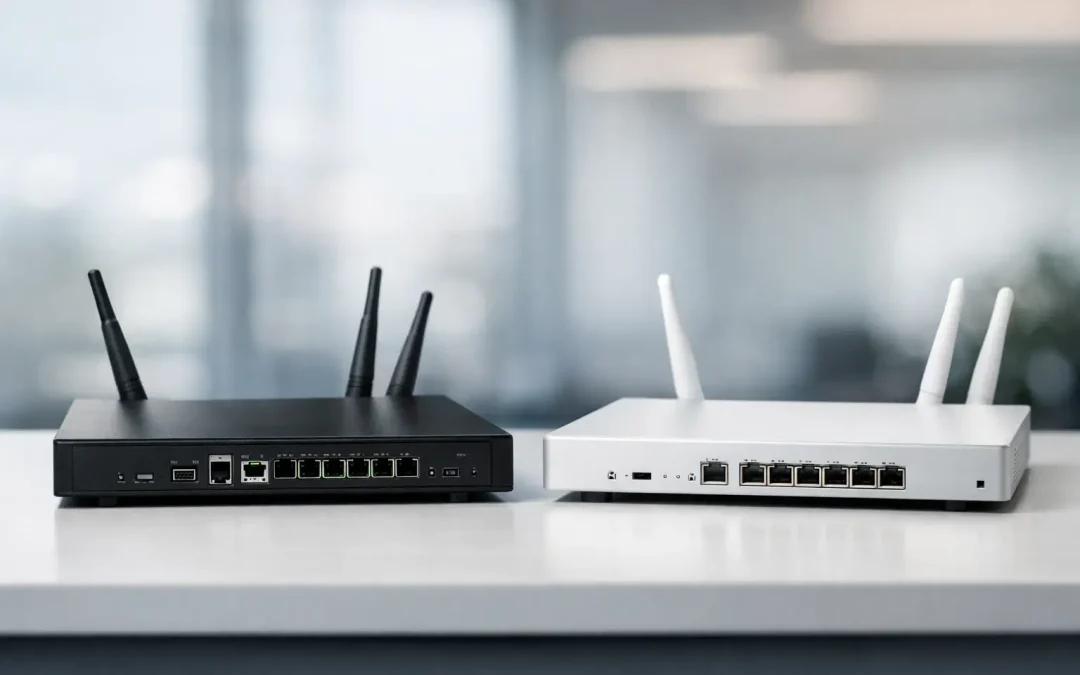
SonicWall vs Meraki firewalls: the main difference
The simplest way to frame it is this: SonicWall generally gives you more hands-on control, while Meraki leans hard into cloud-based simplicity. That does not automatically make one better.
SonicWall is often a strong fit for businesses that want deeper configuration options, granular security policies, and flexibility across more traditional IT environments. It appeals to organizations that need to tune settings carefully, work around unusual application requirements, or align firewall behavior with stricter internal security standards.
Meraki is often a strong fit for organizations that want centralized management with less day-to-day overhead. Its dashboard is one of its biggest strengths. If you have multiple locations, limited internal IT resources, or a need to make changes quickly without navigating a complex interface, Meraki can be very appealing.
If your business has an experienced IT partner managing security, SonicWall may offer more room to tailor the environment. If your priority is ease of administration across distributed offices, Meraki often has the edge.
Security features and real-world protection
A firewall is not just a box that filters traffic anymore. It is part of your ransomware defense, remote access policy, compliance posture, and visibility into suspicious behavior.
SonicWall has long been known for strong security services, including intrusion prevention, gateway antivirus, content filtering, application control, and advanced threat protection options. In practice, this can be valuable for businesses that want tighter control over what users and devices can do on the network. It also tends to fit well in environments where security policies need to be more customized.
Meraki includes modern security capabilities as well, including advanced malware protection, intrusion detection and prevention, content filtering, and application visibility. Its advantage is often not that it has more features, but that it presents them in a way that is easier for teams to manage consistently. A security tool only helps if it is monitored, updated, and understood.
That said, there are trade-offs. Meraki’s simplicity can mean less flexibility in edge-case scenarios. SonicWall’s depth can mean more time spent on setup, tuning, and ongoing administration. For some companies, especially those with compliance concerns or more complex segmentation needs, that extra control is worth it. For others, it creates unnecessary overhead.
Management and visibility
This is where many buying decisions are really made.
Meraki’s cloud dashboard is one of the strongest reasons companies choose it. The interface is clean, centralized, and designed for quick administration across one site or many. Changes can be made without jumping through multiple management layers, and reporting is generally accessible even for non-specialists. If a business has several branch offices, guest networks, work-from-home users, and switching or wireless gear also managed in Meraki, the operational benefit is clear.
SonicWall management has improved over time, but it is still more of a traditional firewall experience. That is not a criticism. For many IT professionals, that is exactly the point. You have more direct access to detailed settings, policy structures, NAT rules, VPN configurations, and security controls. The flip side is that it usually requires more expertise to manage well.
For a business owner or office manager, the question is simple: do you want a platform that is easier to operate broadly, or one that gives your IT team more room to customize and optimize? Neither answer is wrong, but the wrong match can create frustration quickly.
VPN and remote access performance
VPN quality still matters. Hybrid work, cloud applications, vendor connections, and multi-office operations all rely on secure connectivity.
SonicWall has a strong reputation in VPN deployment, especially for site-to-site tunnels and more traditional remote access models. It can be a very good fit for businesses that need stable branch connectivity, custom VPN policies, and integration into existing security rules. For companies with line-of-business systems hosted on-premises, that control can be especially useful.
Meraki also handles site-to-site VPN well, and its Auto VPN approach is one of the reasons many distributed businesses like the platform. It simplifies connectivity between locations and can reduce deployment time significantly. If your company has several offices and wants them connected quickly with minimal manual setup, Meraki is often easier to roll out.
Remote client VPN has been an area where businesses sometimes have more mixed opinions, depending on the use case and user expectations. In many environments, either platform can work well, but the specific remote access requirements should be reviewed before purchase. A law firm with staff accessing case files from home may have different needs than a dental office connecting a single satellite location.
Hardware ecosystem and network strategy
Firewall decisions rarely happen in isolation. They usually sit inside a larger network strategy.
Meraki becomes more compelling when a business is also standardizing on Meraki switching and wireless. The value of a single pane of glass is real. Troubleshooting can be faster, firmware management is centralized, and visibility across the environment is stronger. For lean IT teams, that reduction in complexity can translate directly into less downtime and fewer support hours.
SonicWall can also fit well into broader business networks, especially where mixed-vendor environments are common. Many small and midsize companies do not replace their entire infrastructure at once. They may keep existing switches, access points, servers, and carrier circuits while upgrading security first. SonicWall often works comfortably in that kind of phased approach.
If your business is planning a larger network refresh, Meraki may deserve extra attention. If you are solving a security problem without rebuilding everything else, SonicWall can be a very practical choice.
Licensing, cost, and long-term value
Cost comparisons between these platforms can get misleading if you only look at hardware price.
Meraki’s licensing model is straightforward, but ongoing subscription costs are a major part of ownership. You are paying for cloud management, support, and access to the platform’s operational simplicity. For many organizations, that is acceptable because it reduces labor and shortens troubleshooting time.
SonicWall also involves licensing for security services and support, but the overall cost structure can feel different depending on the model and feature set. In some cases, SonicWall may look more attractive upfront. In others, the difference narrows once advanced security services are added.
The better question is not which firewall is cheaper. It is which one costs less to own in your environment. A platform that saves your IT provider hours every month may justify a higher subscription. A platform that gives better policy control may prevent costly security gaps. Price matters, but operational fit matters more.
Which one is better for small and midsize businesses?
For many SMBs, Meraki is the better fit when ease of use, multi-site visibility, and simple cloud management are top priorities. It is often a strong option for offices that do not want firewall administration to become a specialized project every time a change is needed.
SonicWall is often the better fit when security policy needs are more detailed, VPN requirements are more custom, or the business wants a firewall that can be tuned more precisely by an experienced IT team. It is also a strong contender for organizations with more traditional infrastructure or stricter control requirements.
This is why a quick online comparison rarely settles the issue. A medical office may care most about secure remote access, content filtering, and compliance support. A hospitality business may care more about guest network separation and simple multi-site management. A CPA firm may need tighter policy control during tax season and beyond. The best platform depends on the operational risk you are trying to reduce.
How to make the right choice
Before buying, look at the real environment, not just the brochure. How many locations do you have? Who manages the firewall today? Do you need deep customization, or do you need something easier to support consistently? Are you planning to standardize the rest of the network, or only replace the firewall? How important is cloud-based visibility for your team?
This is usually where an assessment helps. A good firewall decision should account for bandwidth usage, remote access needs, compliance concerns, security event visibility, existing hardware, and the time your team can realistically devote to management. Tomorrow’s Solutions often sees businesses inherit firewalls that were technically capable but poorly matched to how the company actually works.
The better choice is the one that fits your risk profile, your support model, and your growth plans. If you pick with that in mind, the firewall stops being a recurring headache and starts doing what it should have done all along – quietly protect the business while your team gets back to work.