
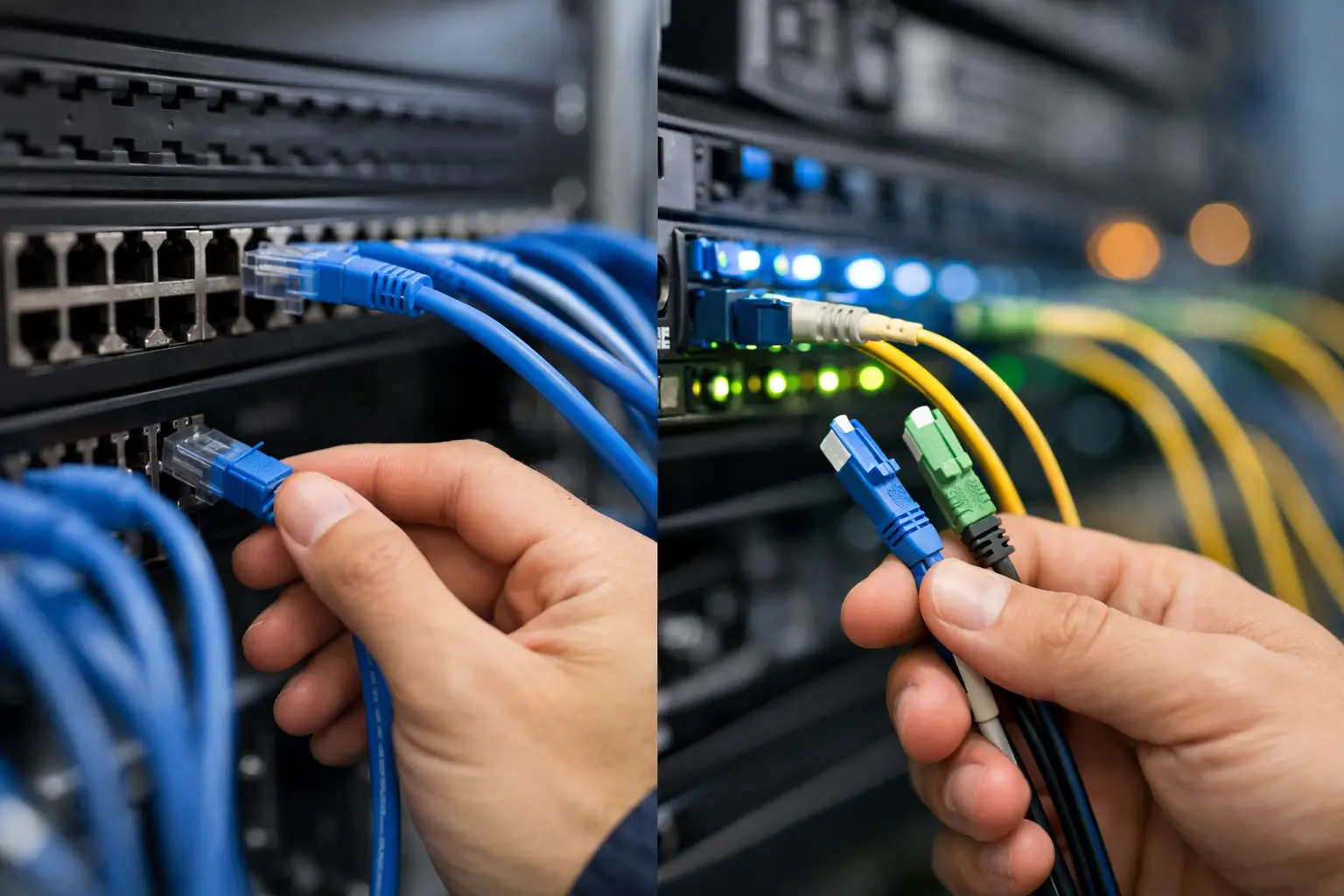
When a business has slow file transfers, dropped VoIP calls, dead wall jacks, or random network outages, the problem often starts behind the walls. A professional network cabling and fiber optic installation service is not just about pulling cable. It is about building the physical foundation your phones, workstations, wireless access points, cameras, servers, and security systems depend on every day.
For small and midsize businesses in Lombard and the greater Chicago suburbs, cabling projects usually happen when the stakes are already high. Maybe you are moving offices, expanding to a new suite, replacing aging infrastructure, or trying to support more cloud applications and remote users. In those moments, shortcuts get expensive fast. Poor cable labeling, bad terminations, undocumented runs, and the wrong media type can lead to recurring downtime, weak performance, and avoidable security gaps.
What a network cabling and fiber optic installation service should actually cover
A business-grade installation starts long before cable is placed. The right provider evaluates how your users work, where equipment should live, what bandwidth your applications require, and how future growth changes the design. A law office, medical practice, warehouse, and municipal building may all need structured cabling, but they do not need the same layout, pathways, or hardware strategy.
Copper cabling still plays a major role in most offices. It supports desktops, phones, printers, cameras, wireless access points, and many network-connected devices. The question is usually not whether copper is needed, but how much, what category makes sense, and how cleanly the plant is organized. In many business environments, Cat6 is the practical baseline because it supports current performance needs without overbuilding the budget.
Fiber optic cabling solves a different set of problems. It is often the right choice for higher bandwidth needs, longer distances between telecom rooms, inter-building connections, and backbone links that need to stay ahead of growing traffic demands. Fiber can also reduce bottlenecks in networks that rely heavily on cloud platforms, virtualized servers, large file transfers, surveillance systems, and dense wireless deployments.
That is why a cabling project should never be treated as a commodity purchase. It depends on distance, speed requirements, environmental conditions, building layout, and the equipment already in place.
When fiber makes sense and when copper is still the better fit
Business owners sometimes hear that fiber is always better. That is not really true. Fiber is excellent for speed, scalability, and longer runs, but it is not automatically the best answer for every endpoint. If you are connecting standard office workstations at typical office distances, copper may be the more practical and cost-effective option.
Fiber usually makes the most sense in backbone and uplink scenarios. For example, if you need to connect MDF and IDF closets across a larger floorplan, support high-capacity switches, or link separate buildings without the distance limitations of copper, fiber is often the right move. It also gives you more room to grow if you expect traffic to increase over time.
Copper remains a strong choice for most user-facing drops. It carries data and can also support Power over Ethernet for devices like phones, cameras, and access points. That matters because power and data over one cable can simplify deployment and reduce clutter.
A good provider explains those trade-offs clearly. If every answer is fiber, you may be paying for capacity you do not need. If every answer is copper, your network may be boxed in sooner than expected.
Why poor installation causes long-term business problems
Cabling mistakes do not always show up on day one. Some problems sit quietly until your network load increases, your office grows, or troubleshooting becomes urgent. That is part of what makes poor workmanship so costly.
Bad terminations can cause intermittent failures that are hard to trace. Poor cable management can make even simple changes risky and time-consuming. Missing labels turn every support visit into a guessing game. Unsecured closets and undocumented patching can create both operational confusion and security exposure.
For regulated businesses, the risks are even bigger. Medical, legal, financial, and municipal environments often need tighter documentation, controlled access to network equipment, and cleaner infrastructure planning to support compliance efforts. The cable plant may not be the only thing auditors care about, but it can absolutely affect your ability to show that systems are organized, secured, and maintained.
This is where experienced installation matters. The physical network should support uptime, not become the hidden reason your staff loses hours to recurring issues.
How a professional network cabling and fiber optic installation service is planned
A proper project begins with a site review. That includes understanding your floorplan, device count, rack and closet locations, patch panel needs, switching environment, and any building constraints. In older offices, there may be surprises behind walls or above ceilings. In multi-tenant buildings, pathway access and landlord coordination can affect the schedule.
After that, the design should match actual business use. If your office depends heavily on VoIP, wireless coverage, security cameras, line-of-business applications, and cloud platforms, the cable count and equipment layout need to reflect that reality. Planning only for current desk locations often leads to expensive change orders later.
Installation should also account for security and continuity. Telecom rooms need to be organized, accessible to authorized personnel, and documented well enough that future support does not slow down under pressure. If a firewall, core switch, ISP handoff, and server equipment all meet in one location, that space should be treated like critical infrastructure, because it is.
Testing is another area where quality separates a real service provider from a low-cost installer. Every run should be verified, documented, and labeled in a way that makes future maintenance straightforward. If you are paying for a professional job, you should not be left with mystery cables and hand-written notes that no one can interpret six months later.
The connection between cabling and cybersecurity
Most people think of cybersecurity as firewalls, antivirus, email filtering, and user training. Those are all important, but physical infrastructure matters too. A disorganized network makes it harder to control access, segment traffic, and respond quickly when something goes wrong.
Clean cabling supports cleaner network architecture. That means easier switch management, better VLAN planning, more reliable wireless deployment, and fewer blind spots when troubleshooting suspicious behavior. If your team cannot quickly identify what is connected where, response time suffers during an outage or security event.
For businesses working toward insurance requirements, written security plans, or audit readiness, well-documented infrastructure is part of the picture. The goal is not just to install cable. It is to build a network that can be secured, managed, and supported without confusion.
What local businesses should expect from the right provider
A cabling partner should be able to speak plainly about design, cost, timing, and risks. You should know where fiber is necessary, where copper is sufficient, how the new installation will integrate with your switches and firewall, and what business disruption to expect during the project.
You should also expect local responsiveness. In active business environments, projects do not always go exactly as planned. Construction delays, tenant changes, ISP scheduling issues, and equipment lead times can all affect the timeline. Working with a team that knows the Lombard and Chicagoland business market can make coordination easier, especially when onsite decisions need to happen quickly.
Tomorrow’s Solutions works with businesses that need more than a cable puller. They need an IT partner who understands how structured cabling, fiber backbones, network security, firewalls, Wi-Fi, VoIP, and business continuity fit together. That broader view matters because the cable plant is only useful if it supports the full network reliably.
When it is time to upgrade your cabling
Many businesses wait too long because the network still works well enough. But there are warning signs that should not be ignored. Frequent connectivity issues, aging Cat5 infrastructure, office expansions, overloaded switches, inconsistent wireless performance, and rising demand from cloud applications all point to a physical network that may be falling behind.
Moves, remodels, and suite reconfigurations are also the right time to reassess cabling. It is far more efficient to fix underlying infrastructure during a planned project than after employees are already trying to work around the limitations.
The best cabling installations are the ones your staff never has to think about. Phones work, wireless stays stable, files move quickly, cameras stay online, and support issues become easier to solve. That is what a well-planned physical network should do – quietly support the business so your team can focus on the work in front of them.